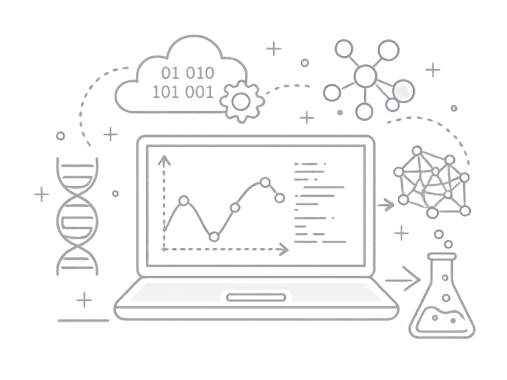
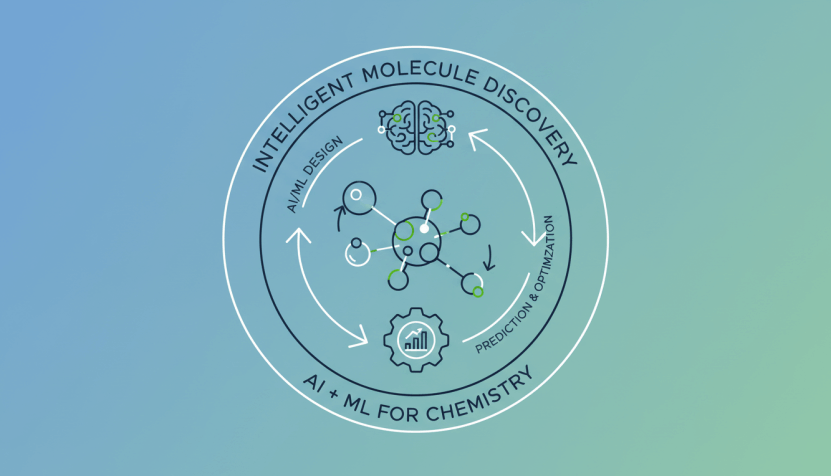
Application of artificial intelligence - machine learning methods to solve problems in computational chemistry, computer aided drug design, materials design. We use state of the methods such as transformers, diffusion model, reinforcement learning, contrastive learning, etc. and have developed predictive and generative models for use in molecule/material design.
We are currently exploring the application of quantum machine learning for molecular property prediction and generative tasks for molecular design. We are systematically investigating the role of quantum entanglement and quantum superposition in increasing the expressivity of the quantum circuits, and how it affects model performance and efficiency.
Generalizability and reliability of the AI/ML models heavily depend on the quality and quantity of data available. We develop datasets specifically for ML applications. Some of these include APOBIND, PLAS-5k, PLAS-20k and AI3 datasets. We have collaborated with Intel, AWS and in silico medicine in developing some of these datasets.
Molecular dynamics simulations, enhanced sampling methods and free energy calculations for studying biological systems and fundamental processes. Some of the areas include protein-ligand binding, protein-DNA binding, protein folding equilibrium, ion channels/transporters and RNA folding dynamics.
Multi-scale modeling and quantum mechanical calculations to model enzymatic reactions, reactions on metal cluster surfaces and other chemical reactions. We work with experimental collaborators in understanding stereoselectivity, preference of competing reactions, supramolecular assemblies, etc.